
El Gouna
Kitesurfing in El Gouna, Egypt – The Practical Kitesurf Guide
Flat-water lagoons, steady thermal winds and year-round sunshine: El Gouna is Egypt’s most reliable kitesurf base on the Red Sea. This guide packs everything you need: best time, spots map, tides, gear sizes, lesson & rental prices, downwinders, safety, activities and where to stay.
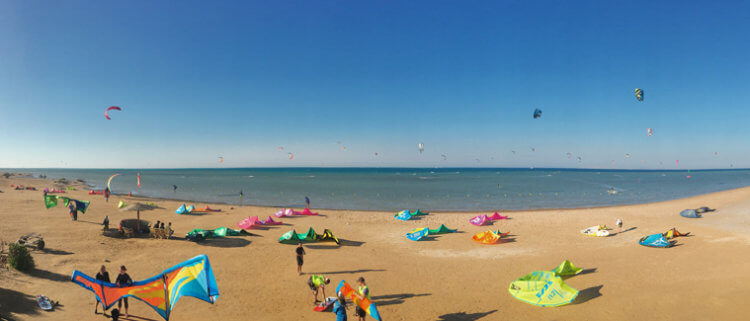
El Gouna at a glance
- Pros: warm water most of the year; huge shallow lagoons for learning; consistent thermals; professional beach operations; easy access from Hurghada airport (≈30–40 min).
- Cons: tidal range affects depth at low tide; designated launch corridors; can be busy in peak weeks; strong sun exposure—bring zinc & hat.
- Best for: beginners who want flat water, improvers chasing longer runs, freeriders, twin-tip trick progression, and wing/foil on suitable tides.
Best time to kitesurf in El Gouna
El Gouna works year-round thanks to desert thermals and Red Sea breezes. Expect stronger, steadier wind from March–October, with pleasant winter riding from November–February (often a size or two bigger). Spring brings longer windows and reliable thermals; summer peaks offer the steadiest stretches; autumn remains kind with warm water and mellow seas. Winter is rideable with larger kites and rewards you with quiet beaches and clear air.
| Month | Wind trend | Typical TT sizes (75–85 kg) | Foil/Wing notes |
|---|---|---|---|
| Jan | Moderate, cooler days | 10–14 m | Great for foil; 4–6 m wing |
| Feb | Moderate | 9–13 m | Stable mornings; foil friendly |
| Mar | Picking up | 8–12 m | Prime for wing 3–5 m |
| Apr | Stronger, frequent | 7–11 m | Chop outside lagoons |
| May | Peak thermal | 7–10 m | Downwind options open |
| Jun | Peak; steady | 6–9 m | Watch sun/UV |
| Jul | Peak; steady | 6–9 m | Early/late sessions bliss |
| Aug | Peak; steady | 7–10 m | Thermals strongest PM |
| Sep | Still strong | 8–11 m | Great flat-water windows |
| Oct | Good shoulder | 9–12 m | Foil golden hours |
| Nov | Variable but rideable | 10–14 m | Bring bigger wing |
| Dec | Mild winter wind | 10–14 m | Thicker shorty or 3/2 |
Tip: aim for mid-tide rising to enjoy more depth across the main lagoons.
El Gouna kite spots & launch areas
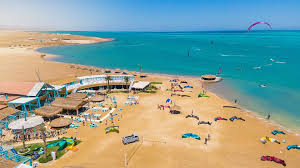
El Gouna’s shoreline mixes shallow sandbars and reef-sheltered lagoons. The most popular kite beaches offer marked launch/landing zones, safety boats and wide flat sections at mid/high tide. Inside the lagoons you’ll find protected, flat water ideal for progression and freestyle drills; outside the reef you get cleaner wind with light chop for long freeride runs.
Main Lagoon (north sector)
Huge shallow area at mid/high tide with butter-flat pockets behind sandbars. Perfect for first waterstarts, stance work and upwind practice. At very low tide it can become ankle-deep—foil users should time it carefully and walk out if needed.
Outer Reef Playground
With boat cover you can access clean wind lines and playful chop—great for longer freeride tacks, small kickers and downwind training. Respect channels and guidance from beach staff when heading out or coming back in.
Foil & Wing zones
Foiling shines on mid/high tide with extra depth. Choose less-crowded corners or designated corridors. Wing foilers love the outside breeze lines—check flag direction and watch for traffic near teaching boxes.
Tides & depth: how it changes your session
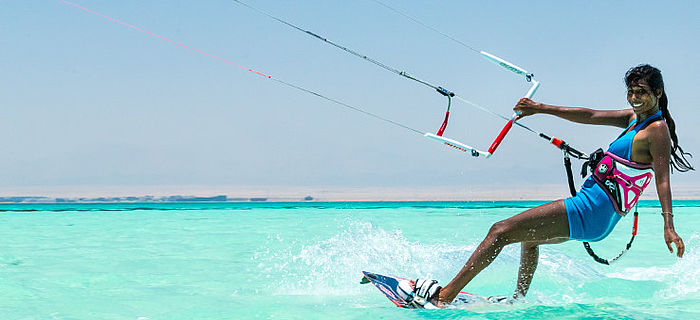
The tide in El Gouna matters. At very low tide, large parts of the lagoon turn shallow (shin-deep or less), which is helpful for first body-drag drills but not ideal for boards with longer fins or foils. As the tide fills in, you get the magic mix: flat water + safe depth for carving and pop. Many schools schedule beginners on mid/high tide for consistent progress.
- Beginners: target mid to high tide lesson slots for safe depth.
- Twintip/freestyle: mid tide rising = sweet spot for flat pockets behind sandbars.
- Foil/wing: avoid extreme low tide; use corridors and confirm rescue cover.
What gear to bring (kites, boards & wetsuit)
If you’re 75–85 kg on TT, a two-kite combo covers most days: 9–10 m + 12 m in summer peaks; in winter add a 14 m for lighter spells. Lighter riders can shift everything 1–2 m down. A freeride TT (135–140) works well; bring a slightly larger board if you’re new. Consider line extensions for marginal days.
- Wetsuit: Spring–autumn: shorty/lycra. Winter: 3/2 (a long-sleeve shorty also works on sunny days).
- Sun/skin: long-sleeve top or UV tee, zinc, hat, sunglasses with retainer.
- Foil masts: shorter masts (60–75 cm) are forgiving in lagoons; go longer outside.
- Safety: booties optional for very low tide and sandbar walks.
Kitesurf lessons & how to choose a school
Look for certified instructors, radio helmets, reliable rescue cover, and clear briefings on channels and right-of-way. For beginners, request mid-tide slots to ensure depth. Improvers benefit from shorter, focused sets (90–120 minutes) with video feedback and a plan per session.
Prices & budgets (what to expect)
Expect typical Red Sea pricing for lessons (private/semi-private), rentals (full equipment or board-only), and beach use (storage/launch services). Multi-day packs unlock better value. If you bring your own gear, check storage/launch fees, compressor access and rescue coverage.
- Private / Semi-private lessons – package rates reduce cost per hour.
- Rental – ask for insurance options and model/year of the quiver.
- Beach use – includes compressor, assistance, rinsing and rescue.
Downwinders & boat support
With the right forecast and safety cover, El Gouna offers friendly downwind lines along the reef. Start with shorter routes and extend distance as you go. Radios and a clear regroup plan make the ride smoother and safer.
Safety, right-of-way & beach etiquette
- Use the designated corridors for launch/landing and keep them clear.
- Give learners and teaching boxes a wide berth; avoid tricks near the beach.
- Right-of-way: starboard tack has priority; look over your shoulder before transitions.
- Foils: stay clear of shallow beginner areas; walk your gear if depth is marginal.
- Hydrate, apply sunscreen often, and take shade breaks—UV and heat build quickly.
Activities to do apart from kitesurfing
El Gouna is more than a kite base—it’s a resort town designed for active days and relaxed evenings. On wind breaks or if you travel with non-kiters, there’s a solid list of activities to keep the trip memorable and help your body recover between sessions.
Diving & snorkeling
You’re on the Red Sea, home to warm turquoise water and vibrant reefs. Expect healthy coral gardens, pinnacles and abundant marine life (lionfish, moray eels, clownfish and more). Many operators run half-day snorkeling and full-day dive boats; beginners can do try-dives while certified divers go for wrecks and deeper reefs.
Desert & quad tours
Swap the water for sand with sunset quad bike rides and Bedouin dinners in the surrounding desert. Trails are beginner-friendly, and the golden hour over the dunes is camera gold. Wear a buff and sunglasses to block dust.
Boat trips & dolphin watching
Day boats cruise the coastal reefs with stops for snorkeling and relaxed swims. Wild dolphin encounters do happen (always keep respectful distances). A great option for mixed groups while riders pick the best wind slots.
Golf & spas
The El Gouna golf club sits in a scenic setting and welcomes all levels. Most hotels also offer spa circuits, massages and steam rooms—perfect for recovering legs after heavy sessions or downwinders.
Culture trips: Luxor & Cairo
If you can spare a day, classic excursions take you to Luxor for Karnak and Luxor temples, plus the Valley of the Kings and Queens; or to Cairo for the Pyramids, Sphinx, the Egyptian Museum and the Citadel. Long days, but bucket-list worthy and easy to arrange from El Gouna.
Marina nights & dining
Unlike isolated Red Sea spots, El Gouna has marina areas with restaurants and bars so you can dine out rather than staying at the hotel every night. Post-session sunsets, ice creams and casual drinks round off a perfect kite day.
Where to stay in El Gouna
Stay near your chosen beach base to reduce transfers and catch the best tide/wind slots. Many riders choose lagoon-side guesthouses or hotels offering early breakfasts, board storage and easy shuttle to the kite beach. If you’re traveling with non-kiters, balance beach access with marina proximity for dinner options.